These are the questions asked during the EuroPython 2026 quiz. They will test your knowledge of the Python language, the community, and of EuroPython 2026. Since we were celebrating 25 years of EuroPython at EuroPython 2026, some questions also touched on that theme. (Unless explicitly stated, questions refer to CPython 3.14.)
Note that the version of the quiz presented here is less interactive than the one presented at the conference.
Questions
In 25 years of conference, which of these European cities never hosted EuroPython?

- Bilbao
- Birmingham
- Lisbon
- Prague
This year's conference programme has it all. This quiz. Talks. Lightning talks. Tutorials. Summits. Open spaces. Talks. And posters during lunch breaks. How many posters are scheduled to be presented at EP 2026?
- 4
- 6
- 12
- 15
Which of the following Python-related projects has the FEWEST stars on GitHub?
- CPython
- Django
- FastAPI
- uv
The Python repo has over 130,000 commits made by more than 3,500 contributors over the past 35+ years. The Python core developers are the people with permissions to commit directly to the CPython GitHub repo and plenty of them were at the conference. Out of the following 4 core devs, who were all at the conference, who's made the fewest commits?
- Guido van Rossum, the creator of Python
- Hugo van Kemenade, Python 3.14 and 3.15 release manager
- Łukasz Langa, Python Developer in Residence for ~5 years
- Pablo Galindo Salgado, Python 3.10 and 3.11 release manager
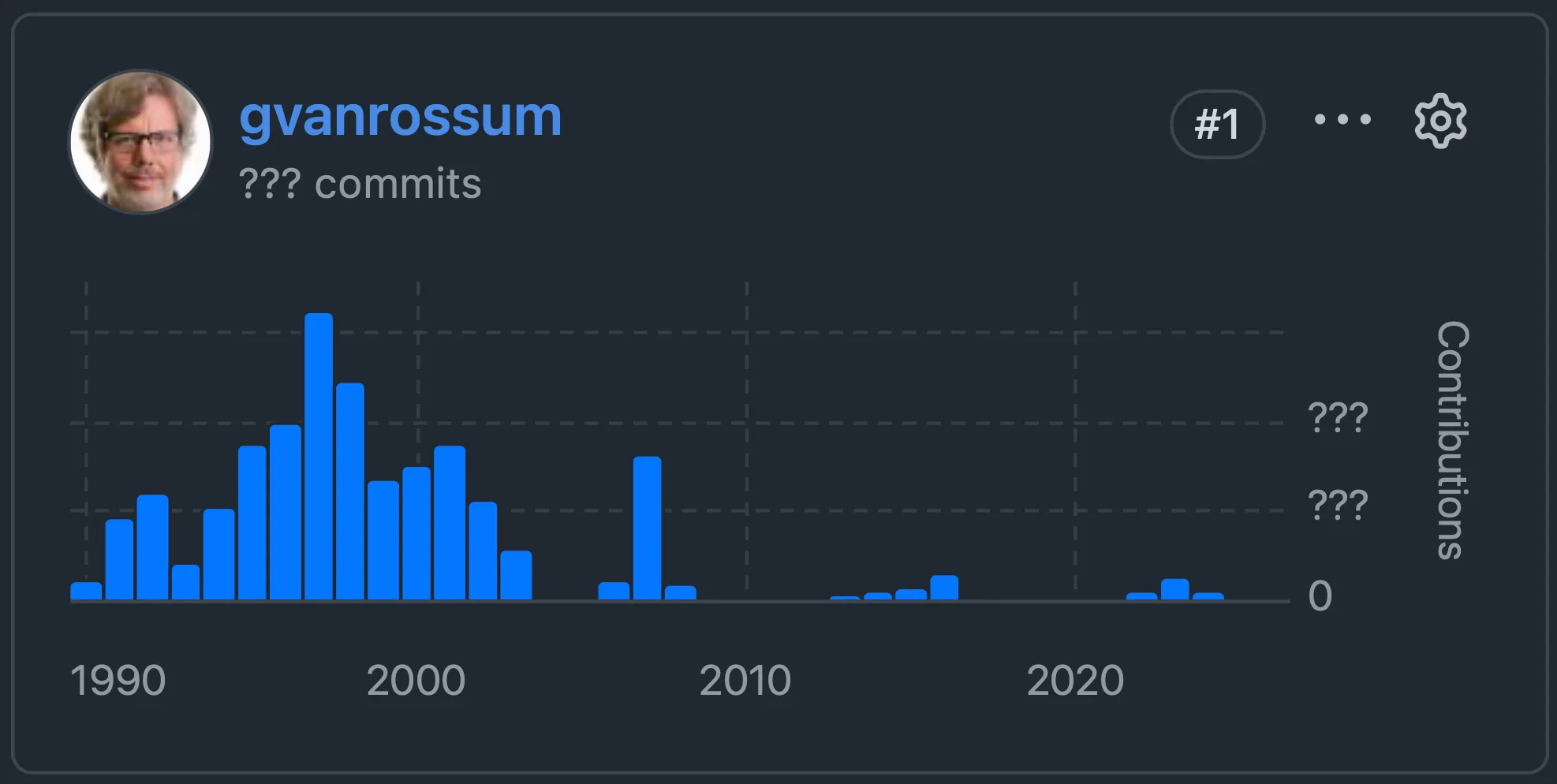
Speaking of commits, how many commits did Guido van Rossum make?
Since we're celebrating 25 years of EuroPython, which of the following expressions does not evaluate to 25?
0x190b110010o3325
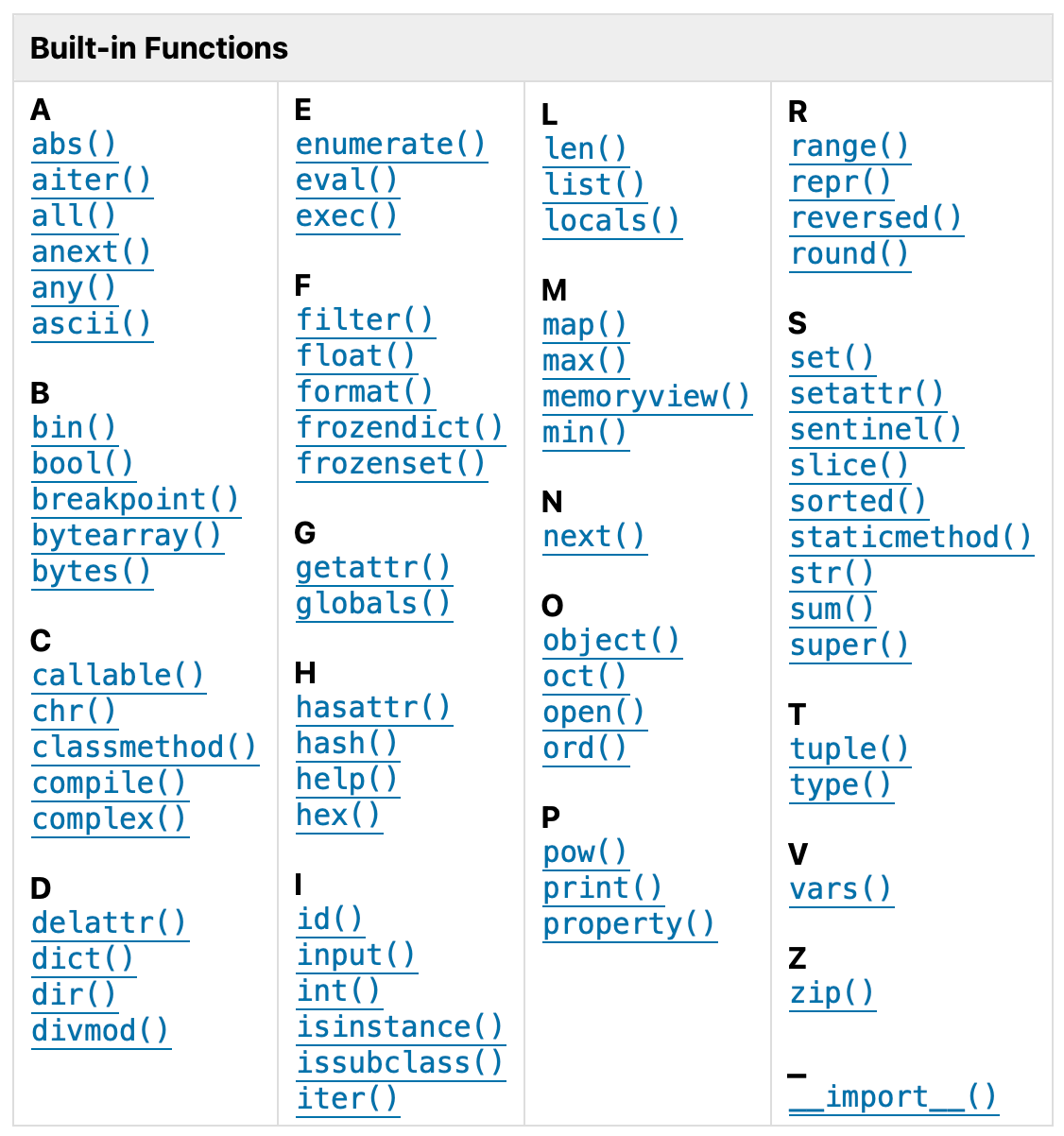
3.15 comes with two new built-in functions. Before that, the previous Python version that got new built-ins was 3.10, with also TWO new built-ins. What two built-ins were introduced in 3.10?
-
aiterandanext -
breakpointandcompile -
frozendictandsentinel -
frozensetandmemoryview
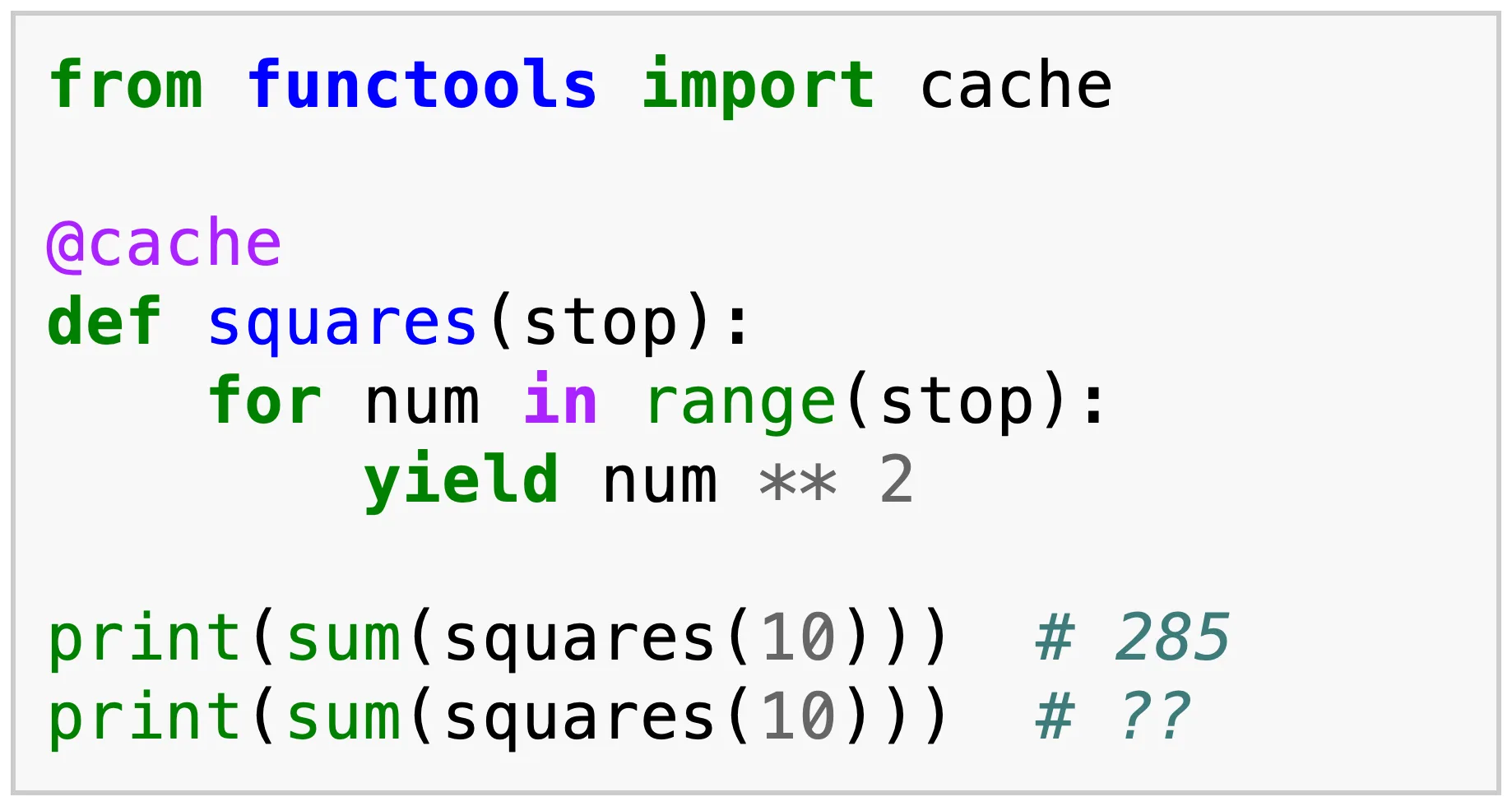
What's printed by the second print if you run this code?
0285KeyErrorValueError
By the way, speaking of commits, do you still remember how many commits Guido van Rossum made?
What does the following cursed Python 2 code print?
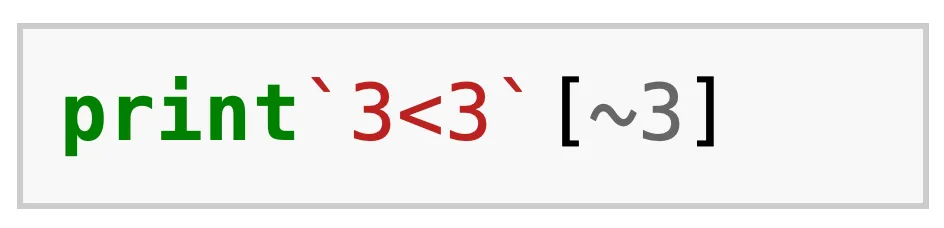
'a'25TrueSyntaxError
Explanations
Question 1 — Hosting EuroPython
EuroPython 2009 and 2010 was hosted in Birmingham. EuroPython 2015 and 2016 was hosted in Bilbao. EuroPython 2023, 2024, and 2025 was hosted in Prague. Of the four options, Lisbon is the only European city that never hosted an EuroPython.
Question 2 — poster presentations
Originally, 9 poster presentations were scheduled. After a mixup and a couple cancellations we ended with only 6.
Question 3 — GitHub stars
The official quiz asked you to order all four projects, from most stars to least stars. Can you do it?
On the 15th of July of 2026, this would be the correct ordering:
- FastAPI, 101k
- Django, 88.2k
- uv, 87.5k
- CPython, 73.8k
Question 4 — commits
On the 15th of July of 2026, GitHub reported the following number of all-time commits per contributor:
- Guido van Rossum (11,309)
- Pablo Galindo Salgado (1,035)
- Hugo van Kemenade (844)
- Łukasz Langa (473)
The point of the question was that Łukasz's impact during the 5 years he was a Dev in Residence was visible in the absurd number of PRs he reviewed and co-authored, along with the number of issues he took care of. Neither of these are reflected on the number of commits that GitHub reports.
Question 5 — Guido's commits
During the conference, this question was presented first for double the points. Instead of 4 options, you had to type the exact number. No one got it right. (As was expected.)
A few questions later, this question was asked again. This time, over 20% of the players got it right!
Question 6 — 25
All four expressions are valid integers written as literals in different bases.
-
0x19is hexadecimal for1 * 16 + 9 * 1which is 25. -
0b11001is binary for1 * 16 + 1 * 8 + 1 * 1which is 25. -
0o33is octal for3 * 8 + 3 * 3which is 27. -
25is decimal for2 * 10 + 5which is... 25!
Question 7 — new built-ins
Just check the documentation.
frozendict and sentinel are new in Python 3.15.
aiter and anext are the asynchronous counterparts to iter and next and were added in 3.10.
breakpoint was added in 3.7.
And the others have been around for a while.
Question 8 — cached generator
The first time the generator squares is called with squares(10) and summed, you get the sum of the first few squares (285).
But this generator was cached, so the next time squares(10) is called, you get the exact same generator.
What's the problem?
The problem is that the generator has been exhausted already, so you're summing an empty iterable, which produces the value 0.
In short, don't cache generators.
Question 9 — Guido's commits... again!
During the conference, around 20–25% of the participants got the answer right the second time around. That's pretty impressive, considering the quiz was very fast-paced.
Question 10 — cursed Python 2 code
The expression 3<3 evaluates to False and the backticks, in Python 2, are the same using the built-in repr.
So, repr(3<3) is the string "False".
The tilde ~ is the bitwise invert operator and [~3] is the same as [-4], evaluating to the letter 'a'.
Finally, print was a statement in Python 2, so putting the whole thing together means you'll print the letter 'a'.
Source: answer by xnor on codegolf.stackexchange.com.
Become the smartest Python 🐍 developer in the room 🚀
Every Monday, you'll get a Python deep dive that unpacks a topic with analogies, diagrams, and code examples so you can write clearer, faster, and more idiomatic code.